

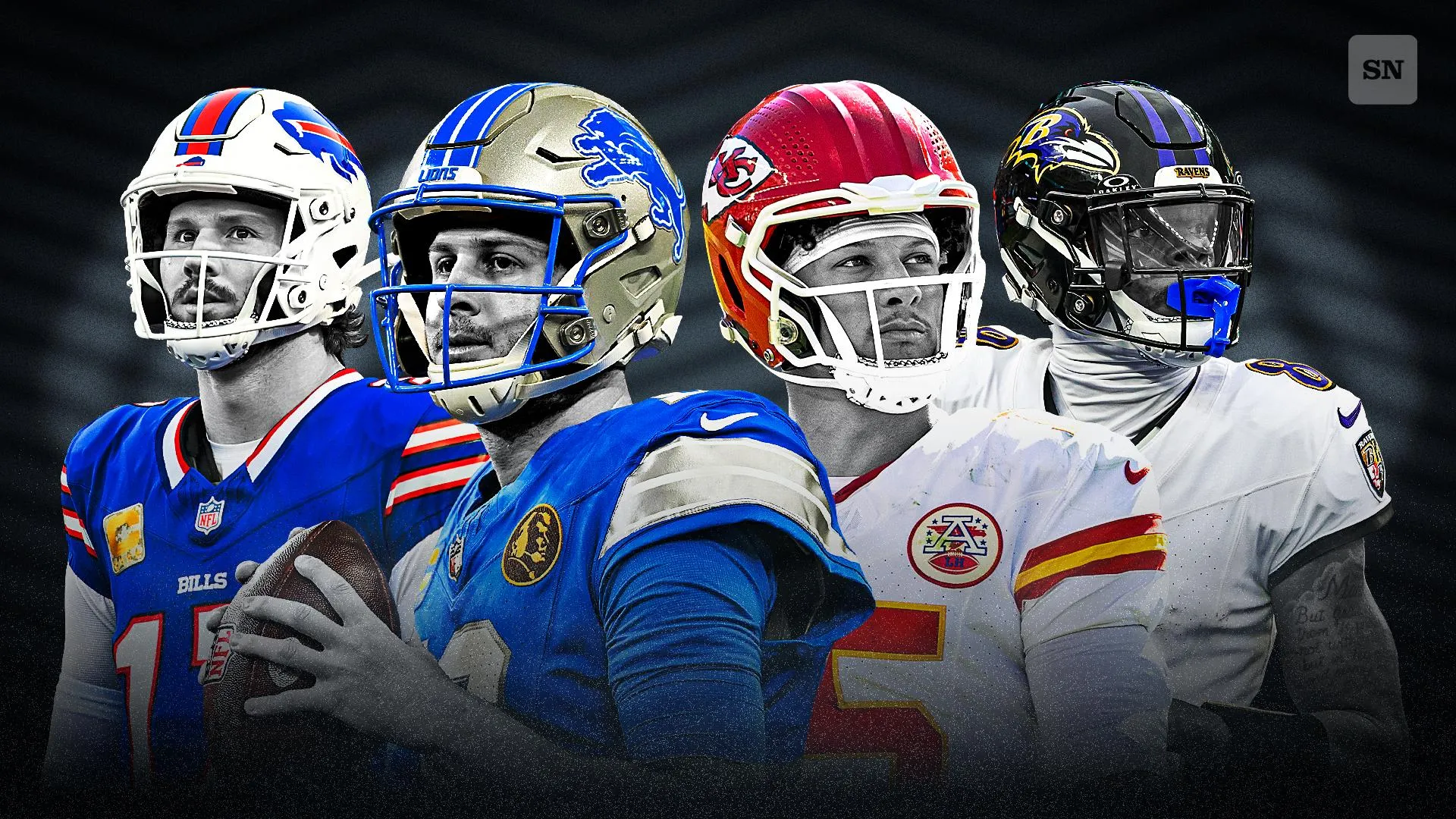
Quarterback Power Rankings serve as the definitive barometer for success in the NFL, where the difference between a Super Bowl contender and a basement dweller often rests on the shoulders of one individual. It is the most scrutinized position in professional sports, a role that combines the tactical mind of a chess grandmaster with the physical durability of a prize fighter. When we talk about the best signal-callers, we are not just looking at stats; we are looking at the intangible ability to inspire a locker room.
Every Monday morning, fans across the country wake up ready to argue about which player deserves the top spot. It is a subjective exercise, yet it is rooted in the very real impact these athletes have on the game. A great quarterback can mask a porous offensive line, elevate a mediocre receiving corps, and keep a defense off the field through sheer time of possession. This is why the conversation around these rankings is so passionate and never-ending.
When we evaluate the league’s best, we must consider more than just the box score. A three-hundred-yard passing game is impressive, but was it achieved in a blowout or during a high-stakes fourth-quarter comeback? True excellence is measured in those “clutch” moments when the lights are brightest and the pressure is highest. It is this specific nuance that makes any Quarterback Power Rankings list so difficult to curate and even harder for the public to agree upon.
The hierarchy of the league is constantly shifting, influenced by injuries, coaching changes, and the natural progression of young talent. One week, a veteran might look like he is regaining his prime, and the next, a rookie might showcase a dual-threat capability that redefines the modern offense. This volatility is exactly what keeps us glued to our screens every Sunday, waiting for the next highlight that will shake up the standings.
Defining the Top Tier in Quarterback Power Rankings
The elite tier of any ranking is usually reserved for the players who have proven they can win regardless of the circumstances. These are the “game changers” who force opposing defensive coordinators to stay awake at night. When we look at the very top, we see names like Patrick Mahomes, whose ability to improvise and create magic out of broken plays has set a new gold standard for the position.
Mahomes is often the anchor of our Quarterback Power Rankings because he defies the traditional laws of physics. Whether it is a no-look pass or a scramble for a first down on a bad ankle, he consistently finds ways to succeed. His presence alone provides a psychological advantage that few other players can match, making his team a threat to win every single time they take the field.
Following closely are the “pure” passers and the dominant athletes like Lamar Jackson and Josh Allen. Jackson has fundamentally changed how teams scout the position, proving that an elite runner can also be an elite processor from the pocket. His ability to make defenders miss in open space is a nightmare for tacklers, while his improved touch on deep balls has made him a truly two-dimensional threat that is impossible to fully neutralize.
Josh Allen represents the “power” element of the position, using his massive frame to shed tacklers and his rocket arm to fit balls into windows that simply shouldn’t exist. While he sometimes struggles with turnovers, his “ceiling” is arguably as high as anyone in the history of the sport. Watching him leap over a linebacker or fire a sixty-yard bomb while on the move is a reminder of why he remains a staple at the top of the list.
How Mobility Shifts the Modern Quarterback Power Rankings
The era of the “statuesque” pocket passer is slowly fading into the history books. In today’s NFL, if a quarterback cannot move, they are often a liability. The rise of sophisticated pass-rushing schemes means that being able to evade the first defender is no longer a luxury—it is a requirement for survival. This shift has radically altered how we view the middle and lower tiers of the league’s starters.
Players like C.J. Stroud and Justin Herbert are perfect examples of the modern archetype. They have the size and arm strength of the traditional greats but possess the mobility to extend plays and frustrate defenders. Stroud’s rookie season was a revelation, showing a poise and accuracy that we rarely see from players so young. His rise up the rankings was one of the most exciting storylines for anyone following the league’s development.
On the other hand, the “veteran guard” like Aaron Rodgers or Matthew Stafford relies on a different kind of mobility—the mobility of the mind. They have seen every coverage and every blitz a defense can throw at them. While they might not outrun a twenty-two-year-old defensive end, they can outthink them. This mental processing is a vital part of our evaluation, as it allows these players to stay competitive even as their physical tools begin to naturally decline.
The debate often intensifies when we discuss “system” quarterbacks versus “elevators.” Is a player like Brock Purdy successful because of his own talent, or because he is surrounded by elite weapons and an offensive genius? This question is central to many debates. For some, Purdy’s efficiency is proof of his elite status; for others, it is a sign that he is simply a high-level executor of a perfect plan.
The Emotional Rollercoaster of Weekly Quarterback Power Rankings
Football is an emotional game, and our perception of players is often skewed by the most recent result. A “bad” game can lead to calls for a player to be benched, while a “great” game can lead to MVP talk. Maintaining a balanced perspective requires us to look at the larger body of work. We have to differentiate between a temporary slump and a genuine decline in ability, which is easier said than done.
I remember watching Jalen Hurts during his Super Bowl run, where he looked like an unstoppable force both on the ground and through the air. His leadership and calm demeanor were infectious. Yet, when the team struggled in the following season, his ranking began to dip. This highlights the fragility of the position; you are only as good as your last few drives in the eyes of the media and the fanbase.
The pressure of being a top-ranked quarterback is immense. You are the face of the franchise, the highest-paid player, and the person who takes the blame for every loss. This psychological burden can weigh heavily on even the most talented individuals. Some players thrive under this spotlight, using it as fuel to improve, while others seem to shrink as the expectations grow. This mental toughness is an “invisible” stat that we always try to account for.
Rankings also serve as a source of motivation for the players themselves. While most will publicly say they don’t look at the media, many use a perceived “disrespect” as a chip on their shoulder. Seeing a rival ranked higher can spark a renewed focus during the training week. This competitive spirit is what drives the league forward, ensuring that nobody stays at the top for long without a fight.
Coaching also plays a massive role in where a player lands on our list. A great coach can hide a player’s weaknesses and highlight their strengths. Look at how Jared Goff’s career was resurrected in Detroit. He went from being seen as a “bridge” quarterback to a legitimate top-ten contender. This turnaround is a testament to the power of a supportive environment and a scheme that fits a player’s specific skill set.
When we talk about the “middle class” of the position, we are often talking about players like Kirk Cousins or Geno Smith. These are the reliable starters who can win you games but might not be able to carry a team to a championship on their own. They are the benchmark for the league. If your quarterback is better than this group, you have a chance; if they are worse, you are likely looking for a replacement in the next draft.
The influx of rookie talent adds a layer of “projection” to our rankings. Evaluating someone like Caleb Williams or Jayden Daniels requires us to guess how their college success will translate to the professional level. The speed of the NFL is so much faster than college, and the windows for throws are so much smaller. Some rookies adapt instantly, while others need a year or two to find their rhythm.
We also have to consider the “toughness” factor. Football is a brutal sport, and staying healthy is a skill in itself. A quarterback who can take a hit and stay in the game is worth their weight in gold. Think of players like Joe Burrow, who has dealt with significant injuries but always returns with the same “cool” confidence. His resilience is a major factor in why he consistently ranks near the top when he is on the field.
The “eye test” remains the most controversial part of player evaluation. Analytics can tell us a lot, but they don’t capture the “feel” of the game. Sometimes a player just looks like they are in control. They move through their progressions with a rhythm and a confidence that doesn’t always show up in the EPA (Expected Points Added) per play stats. This is where the artistry of the position meets the science of the game.
The supporting cast is the final piece of the puzzle. It is unfair to judge a quarterback who is playing behind a line that gives up five sacks a game. Similarly, a player with three All-Pro receivers is going to look better than they actually are. We try to “normalize” these factors, looking at how a player performs under pressure and how accurately they throw the ball, regardless of who is catching it.
The volatility of the league means that our Quarterback Power Rankings are essentially a living document. A single trade, like the one that sent Russell Wilson to Denver or Aaron Rodgers to New York, can change the landscape of an entire conference. These moves create high expectations that are often difficult to meet, leading to dramatic shifts in how these players are perceived by the public.
One of the most fascinating aspects of the modern game is the “redemption” story. We see players who were written off as busts, like Baker Mayfield, finding a second life and climbing back up the rankings. These stories of perseverance are a reminder that talent is only one part of the equation. Perseverance, fit, and timing are just as important in the quest for NFL stardom.
As the season progresses, the stakes for these rankings only get higher. In December and January, the conversation shifts from “who is the most talented” to “who do you want with the ball in their hands with two minutes left?” This “clutch” factor is the ultimate tiebreaker. It is what separates the great players from the legends who end up in the Hall of Fame.
The future of the position is incredibly bright, with more athletic and versatile players entering the league every year. We are seeing a diversity of styles, from the “point guard” style of Tua Tagovailoa to the “linebacker with an arm” style of Anthony Richardson. This variety makes the league more exciting and the task of ranking the players even more difficult.
Every year, a new star emerges from nowhere to challenge the established order. Whether it is a late-round pick who finds the right system or a veteran who finally gets the right coach, the “surprise” factor is what makes the NFL so compelling. We are always on the lookout for the next player who will force us to tear up our lists and start from scratch.
Ultimately, the goal of any ranking is to celebrate the incredible skill and dedication of these athletes. To even be a starter in the NFL is a monumental achievement. To be considered one of the top ten in the world is a level of excellence that few humans will ever understand. We argue about the order because we care about the game and the impact these individuals have on our favorite teams.
The debate will continue as long as the ball is being snapped. New players will rise, legends will fade, and the “perfect” ranking will remain as elusive as ever. But that is the point. The discussion is the lifeblood of the sport, keeping us engaged and passionate through every win, every loss, and every spectacular touchdown pass.
In the end, the only ranking that truly matters is the one at the conclusion of the Super Bowl. The player holding the trophy is the undisputed number one. Until that moment arrives, we will keep analyzing the tape, checking the stats, and debating who truly belongs at the pinnacle of the sport. It is a journey we are all on together, fueled by the love of the game and the pursuit of greatness.
Read also :-
mohun bagan super giant vs punjab fc lineups
kerala blasters vs chennaiyin fc player ratings
girona fc vs real madrid lineups
chennaiyin fc vs kerala blasters player ratings